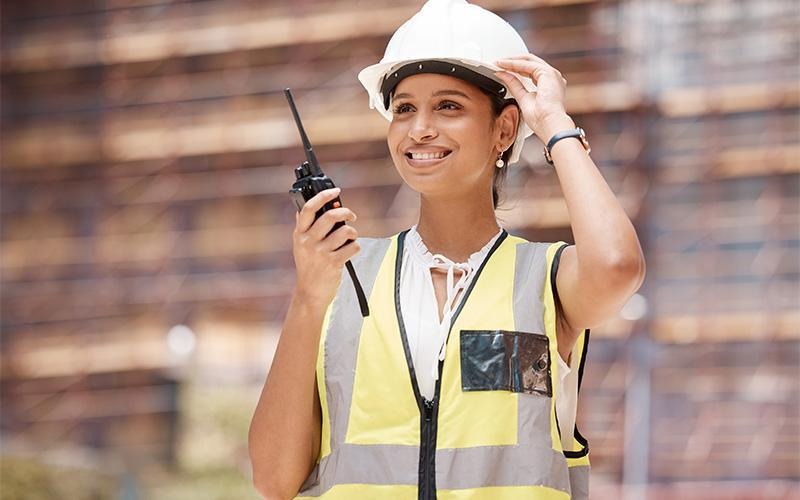
In industries where clear and immediate communication is essential, industrial walkie-talkies remain a reliable tool. From construction sites to large-scale warehouses, these devices offer real-time voice connectivity without relying on mobile networks. One of the most common questions professionals ask when choosing these devices is how far they can transmit. The answer, however, depends on various factors ranging from the environment to the device specifications.
Understanding Line-of-Sight Communication
Industrial walkie-talkies operate on radio frequencies that are generally limited by line-of-sight. This means the signal travels in a straight path and can be obstructed by physical barriers such as buildings, walls, and hills. In open areas like shipping yards or outdoor events, communication can typically reach up to 5 to 10 kilometres. However, in more cluttered environments like urban zones or dense industrial spaces, the range might drop to less than 1 kilometre.
The physical structure of the area significantly influences how far the signal can travel. In Singapore’s urban landscape, for instance, the combination of high-rise buildings and steel structures can shorten the effective range of walkie-talkies. Choosing a device with stronger wattage and better antenna design becomes essential in such settings.
The Role of Power and Frequency Bands
When evaluating how far walkie-talkies can communicate, the device’s wattage plays a crucial role. Most industrial models are equipped with 4 to 5 watts of transmitting power. Higher wattage generally translates to broader coverage, although there are diminishing returns if environmental interference is high.
Commercial two-way radios typically operate on UHF (Ultra High Frequency) or VHF (Very High Frequency) bands. UHF radios are ideal for indoor use and areas with many obstacles because their shorter wavelengths penetrate walls more effectively. VHF, on the other hand, is better suited for outdoor use where fewer obstructions are present. Knowing your specific environment is key to selecting the appropriate frequency range.
Real-World Performance Versus Marketing Claims
It is important to note that the maximum range advertised by manufacturers often reflects ideal, unobstructed conditions. While some products may boast ranges of up to 30 kilometres, these figures usually assume perfect line-of-sight with no interference. In reality, factors such as electrical interference from other devices, weather conditions, and even human bodies can reduce the range considerably.
For most industrial applications in Singapore, users can expect a functional range of 2 to 5 kilometres using high-quality commercial two-way radios. However, this range can drop significantly in basements, metal-clad structures, or densely packed buildings, which is why some industries use repeaters to extend communication coverage.
Choosing the Right Device for Your Needs
When selecting industrial walkie-talkies for professional use, it is crucial to consider more than just range. Battery life, durability, IP ratings (for water and dust resistance), and audio clarity also play vital roles. Many workplaces in Singapore, such as manufacturing plants or logistics hubs, rely on rugged models built to withstand drops, exposure to elements, and prolonged usage.
It is also beneficial to look into whether the devices support digital or analogue transmissions. Digital models often provide clearer audio, greater range, and enhanced security features such as encryption, making them preferable for sensitive operations.
Enhancing Coverage with Accessories and Infrastructure
To maximise coverage in challenging environments, additional tools can be employed. External antennas can be mounted on rooftops or tall poles to increase signal strength. Repeaters are another common solution, especially in large facilities or multi-storey buildings, where they relay signals and extend the coverage zone of your walkie-talkies.
In certain scenarios, particularly in tunnels or underground sites, specialised communication systems may be required. These integrate radio signal boosters and custom infrastructure to ensure uninterrupted communication where standard solutions may fail.
Practical Expectations for Singapore Industries
In practice, the effective range of industrial walkie-talkies across Singapore’s varied landscape will depend on how and where they are used. Ports and construction zones may benefit from near-maximal range, while indoor factories or event spaces will need strategic deployment of infrastructure to avoid dead zones.
When evaluating commercial two-way radios for your organisation, it’s worth conducting on-site testing or consulting a local supplier familiar with Singapore’s regulatory environment and site-specific constraints. This approach ensures you’re not just purchasing on paper specs, but on proven effectiveness for your actual conditions.
Conclusion
While the advertised range of industrial walkie-talkies may appear impressive, real-world performance is shaped by numerous environmental and technical factors. By understanding how line-of-sight, frequency bands, and terrain affect transmission, users can make more informed decisions and get the most out of their communication devices. Whether you’re working across an open port or inside a complex facility, selecting the right tools and enhancements will ensure seamless communication.Reach out to Smartcom today to assess your needs and choose the best solution for your communication challenges.